Throughout June, we hosted a dynamic Water Seminar Series featuring three outstanding speakers who offered insights into critical issues in hydrology and water science. The series brought together researchers, students, and professionals to engage in thought-provoking discussions on topics ranging from groundwater conceptual models to microplastics transport, culminating in the prestigious Birdsall-Dreiss Lecture.
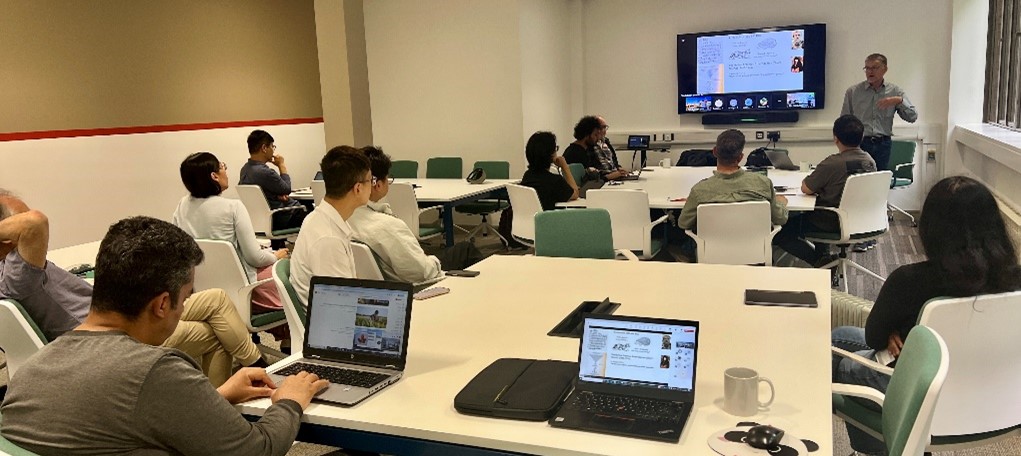
13 June — Prof. Okke Batelaan (Flinders University)
Talk Title: Hydro(geo)logical Conceptual Research – Hedgehogs and Foxes Prof. Batelaan opened the series with a stimulating presentation exploring the nature of hydrogeological conceptualization. Drawing on Isaiah Berlin’s metaphor of “hedgehogs and foxes,” he illustrated how different scientific approaches—specialist versus integrative—shape our understanding of groundwater systems. The talk prompted lively discussions on the value of diverse thinking in tackling complex hydrological challenges.
23 June — Dr. Andrew Gray (University of California)
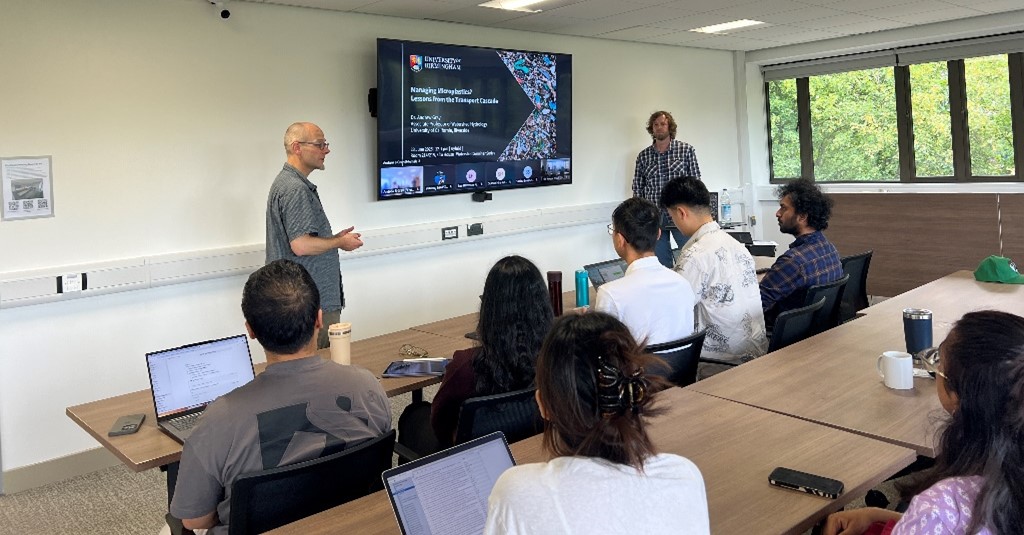
Talk Title: Managing Microplastics? Lessons from the Transport Cascade Dr. Gray delivered a compelling lecture on the behaviour and fate of microplastics in riverine and watershed systems. Highlighting findings from recent fieldwork, he examined how microplastics travel through sediment and water pathways and discussed the limitations of current management
strategies. His talk offered a sobering yet informative look at the scale of the microplastics issue and opened up conversations on actionable solutions.
24 June — Prof. M. Bayani Cardenas (University of Texas)
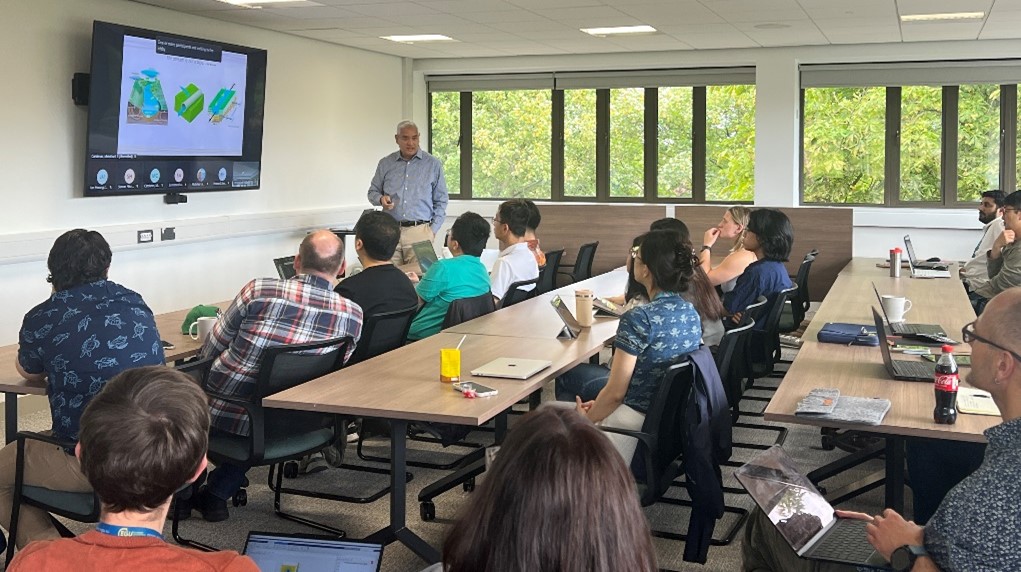
Birdsall-Dreiss Distinguished Lecture Talk Title: How a River’s Periodic Pulse Affects Its Liver: Hyporheic Zones in the Anthropocene We were honoured to host Prof. Bayani Cardenas for this year’s Birdsall-Dreiss Lecture, a capstone event in the seminar series. Over a two-day visit, Prof. Cardenas not only delivered an engaging lecture on the critical role of hyporheic zones—often referred to as a river’s “liver”—in regulating water quality and ecosystem health but also spent considerable time with our students. His insights and mentorship during one-on-one research discussions were incredibly valuable, leaving a lasting impact on our academic community.
The Water Seminar Series continues to be a platform for knowledge exchange and community building. We are grateful to all speakers and participants for making the June series a success and look forward to future sessions that inspire collaboration and innovation in water science.
 English